Charge-per-vote pricing and bundled micropayments run on a purpose-built voting platform are the fastest practical way to turn fan engagement into reliable revenue. We built Izivote around this model, pairing paid voting with real-time dashboards so organizers can launch a campaign and start collecting funds within days. The roadmap below covers pricing, formats, setup, and fairness safeguards that keep campaigns both profitable and credible.
TL;DR:
- Izivote charges a 10% fee on each paid vote, while payouts follow the processor’s schedule rather than the campaign’s closing date.
- Ranked voting or point distribution can feel fairer than ballots with one option; add a judges’ save for close calls and publish rules before launch.
- Per vote sales work best with an engaged audience; smaller events should weigh sponsorships more heavily, and forecast revenue from conversion, votes, and price.
- Reserve bundle discounts for the final 48 hours, and use daily leaderboard resets or vote limits to sustain participation and curb runaway spending.
Table of Contents
- How paid voting works: mechanics, payment flows, and hosting
- Pricing and revenue models: sample options and simple forecasting math
- Formats and use cases that monetize best
- Implementation checklist: step-by-step setup and launch tasks
- Best practices to protect fairness, sustain engagement, and reduce churn
- Author perspective: quick trade-offs and operational tips
- Izivote: implement paid voting, analytics, and embeds
- FAQ
- Sources
How paid voting works: mechanics, payment flows, and hosting
Paid voting is straightforward in concept: a fan selects a nominee, pays for one vote or a bundle, and the payment confirmation triggers an immediate tally update. Getting the mechanics right is what separates a campaign that feels trustworthy from one that invites complaints.
Organizers need to configure a few things before launch:
- Payment flow: connect a processor that confirms the charge and records the vote in the same transaction, so counts update live rather than after a batch delay.
- Authentication: decide whether voters log in, verify by email or phone, or vote anonymously, since identity checks reduce duplicate or bot-driven votes.
- Hosting choice: use a hosted vote page for speed or embed the voting widget directly on an existing event site for brand continuity.
- Dashboard visibility: give staff and sponsors a live view of totals so results, and revenue, are transparent as the campaign runs.
A platform fee typically applies per transaction rather than as a flat subscription cost, and settlement usually follows the payment processor’s standard payout schedule rather than the vote closing date. Clarifying these details before launch avoids disputes once voting opens.
Pricing and revenue models: sample options and simple forecasting math
Most fan voting campaigns combine a few pricing structures rather than relying on one:
- Price-per-vote: a flat charge for a single vote, simplest to explain to fans.
- Bundles: discounted packs (five votes, ten votes) that raise average spend per voter.
- Donation tiers: a vote tied to a charitable minimum, common in fundraiser formats.
- Subscriptions or passes: a flat fee for unlimited voting during a window, useful for long campaigns.
A simple forecasting model multiplies expected attendance by conversion rate, by average votes per converted voter, by price-per-vote. For example, a campaign with thousands of engaged fans, a low single-digit conversion rate, a few votes per converter, and a $1 price-per-vote can generate several hundred dollars in gross vote revenue before the platform fee.
Izivote applies a 10% platform fee per paid vote processed through the platform, so organizers can build that cost directly into their forecasts rather than discovering it after settlement. Bundles and short-term surge pricing during finals tend to raise average revenue per voter, and branded category sponsorships (a sponsor underwriting “Best Newcomer,” for example) add a second revenue stream layered on top of direct vote sales.
Formats and use cases that monetize best
Fans respond differently depending on how a vote asks them to express a preference. Simple approval voting (one click, one choice) is fast but shallow. Ranking or point-distribution formats let fans signal intensity, and behavioral research on digital voting design finds these expressive formats correlate with higher perceived fairness and stronger ongoing engagement than single-choice approval votes.
Formats and events that tend to monetize well include:
- Fan choice awards with multiple nominee categories and photo profiles.
- Talent shows and creator contests with elimination rounds that reward repeat voting.
- Pageants where ranked voting adds perceived legitimacy to results.
- Fundraisers where a vote doubles as a small donation.
Leaderboards that reset daily, or that apply decaying point values, keep competitions from going stale when one nominee builds an early lead. Pairing votes with exclusive content, backstage passes, or merchandise discounts gives fans a reason to buy more than one vote.
Pro Tip: Offer a bundle discount only during the final 48 hours of voting, it creates urgency without undercutting early-campaign revenue.
Implementation checklist: step-by-step setup and launch tasks
Launching a paid voting campaign is mostly a sequencing problem. A practical order looks like this:
- Pick the format and pricing tiers: decide on ranking versus approval voting and set per-vote or bundle prices.
- Build nominee pages: add photos, short bios, and category assignments, then choose hosted or embedded voting.
- Connect payments and confirm fees: test transactions end to end before opening voting to the public.
- Turn on fraud controls: enable identity or login verification where duplicate voting is a risk.
- Activate analytics: confirm the real-time dashboard is tracking votes and revenue accurately.
- Prepare marketing assets: share-ready graphics, sponsor messaging, and published voting terms should be ready before launch day.
Running a short pre-launch test with a handful of real transactions catches payment or display issues before they affect paying voters.
Best practices to protect fairness, sustain engagement, and reduce churn
Revenue depends on fans trusting the result. A hybrid model, mixing fan votes with a judges’ panel that holds a save or override on close calls, preserves credibility without eliminating the fan-driven appeal. Research on explainable voting audits found that a dual-safeguard system combining rank-based aggregation with a judges’ save substantially reduced unfair eliminations compared to simple percentage-based tallying, while keeping audience engagement intact.
A few safeguards consistently hold up:
- Favor ranking or point-distribution inputs over single-choice approval, since expressive formats are tied to higher perceived fairness.
- Apply daily leaderboard resets or decaying point values to prevent one early leader from discouraging later voters.
- Cap votes per account or session to limit runaway spending by a single voter.
- Publish voting rules, windows, and result timelines before the campaign opens, not after.
Hybrid systems that combine rank-based aggregation with expert intervention substantially reduce historical unfair eliminations while preserving engagement.
That kind of transparency matters more when money is involved, since fans scrutinize paid results far more closely than free ones.
Author perspective: quick trade-offs and operational tips
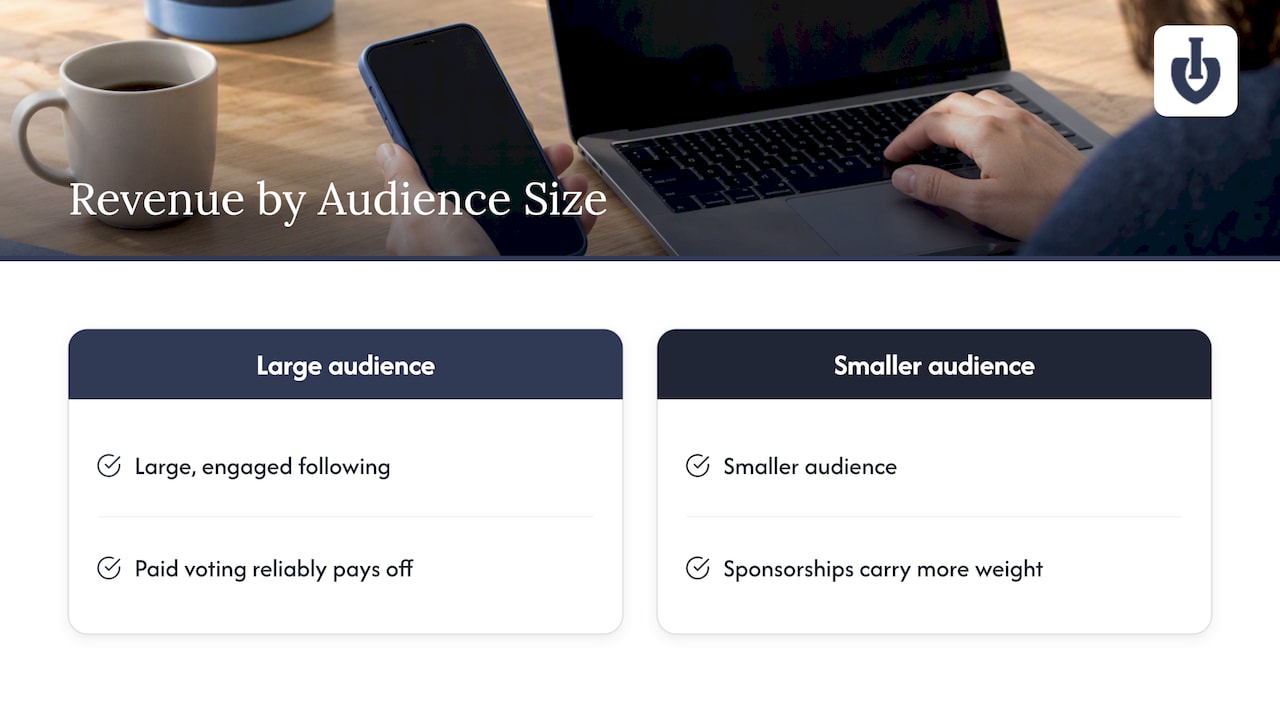
Paid voting reliably pays off when a nominee pool already has an engaged following, think fan awards or talent contests. When the audience is smaller, sponsorships usually carry more weight than per-vote revenue.
Watch for leaderboard fatigue: once a result looks locked in, voting drops off fast. Unclear terms about refunds or vote limits are the other common complaint.
My practical advice: price for volume, not margin, and spend more effort on fairness perception than on squeezing extra cents per vote.
— Joshua
Izivote: implement paid voting, analytics, and embeds
We built a voting platform specifically for fan and people’s choice awards, which means organizers skip the setup work a generic form tool would require. Paid voting, identity-based voting, and open voting all run on the same dashboard, so switching formats between categories or events takes minutes rather than a rebuild.
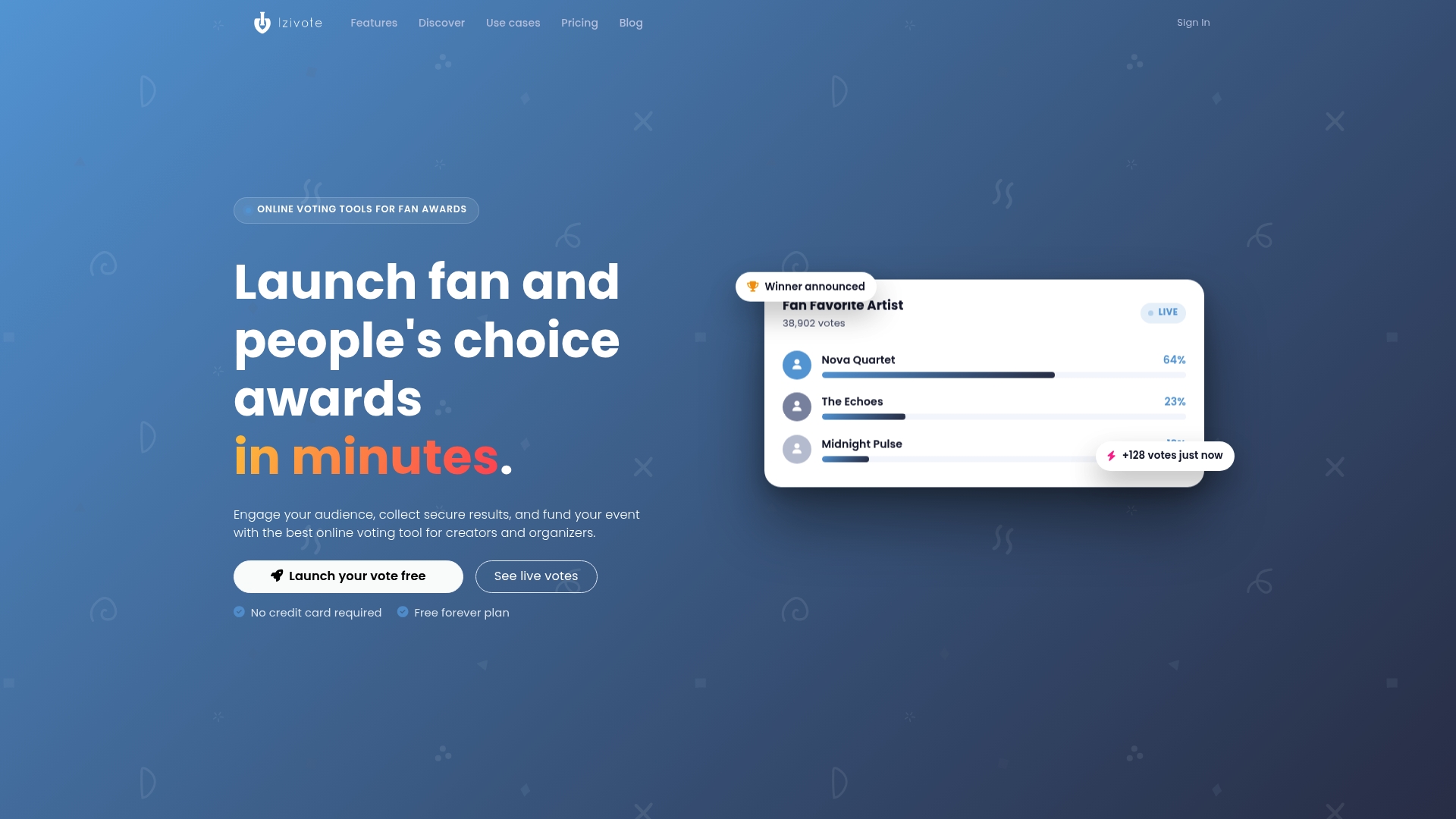
What organizers get with us:
- Self-serve setup that launches a voting page without a developer.
- Embeddable voting widgets that keep the experience on an organizer’s own site.
- Real-time dashboards showing vote counts and revenue as they happen.
- Multiple voting modes, including paid, login-based, and identity-verified voting, selectable per category.
Our plans start with a free tier for small events and scale to paid plans for larger campaigns with more categories and features. Check Izivote pricing to compare plans and see the paid voting fee structure before you launch.
FAQ
What does paid voting mean for a fan awards campaign?
Paid voting means fans pay a small fee, either per vote or in a discounted bundle, instead of voting for free. Organizers keep the revenue minus the platform fee, which on Izivote is a flat 10% per vote processed.
How much can a fan voting campaign realistically earn?
Earnings depend on audience size, conversion rate, and price-per-vote, so there’s no single figure that applies everywhere. A rough estimate comes from multiplying expected voters by conversion rate, average votes per voter, and price, which gives organizers a conservative revenue band before launch.
How long does a paid voting campaign typically run?
Most fan voting campaigns run anywhere from a few days for a single event to several weeks for a multi-round talent contest or awards season. Shorter campaigns tend to use daily leaderboard resets, while longer ones often add bundle discounts near the close to sustain late-stage voting.
What keeps a paid voting result from feeling unfair to fans?
Publishing clear rules, voting windows, and result timelines before the campaign opens is the single biggest factor in perceived fairness. Using ranking or point-based voting instead of simple approval, and adding a judges’ save for close calls, also helps preserve credibility.
What legal or compliance steps matter when monetizing votes?
Payment processing needs to meet standard card-processing compliance, and voter data should be handled under applicable privacy rules for the regions where fans are voting. Organizers running fundraising-tied votes should also confirm local rules on charitable solicitation before launch.
Leave a Reply