
Donation-based voting is a contest format where supporters cast votes by giving money, and the money goes to a cause. The nominee with the most votes wins recognition, and the cause receives the funds. It works well for people’s choice awards, school contests, pageants and charity galas. It also carries obligations: you must tell donors exactly where their money goes, keep the vote honest, and stay clear of anything that looks like paying for votes in an election.
This guide covers how the model works, the rules a US organizer should know, how to protect the integrity of results, and how to set one up on Izivote.
Key takeaways
- Donation-based voting links each vote to a gift, so you raise money and engagement in the same campaign.
- Be explicit about who receives the money, what fees are deducted, and whether gifts are tax-deductible. The FTC treats unclear claims here as deceptive.
- Keep fan and charity contests clearly separate from political elections, where paying for votes is a crime.
- Verify every beneficiary charity yourself with IRS records before you promote it.
- Protect results with identity checks, separate voter records from ballots, and publish your rules before voting opens.
Table of Contents
- What donation-based voting actually is
- Where donation-based voting fits
- The legal line: paid votes versus paying for votes
- Donor protection: what the FTC expects
- Vet every charity before you promote it
- Keep the vote honest
- A worked example
- Setting it up on Izivote
- A launch checklist
- FAQ
- Sources
What donation-based voting actually is
The format has a few common variations:
- Donate to vote for a nominee. Each nominee represents a person, team or class. Supporters buy votes, and the funds go to one shared cause. The nominee with the most votes wins a title, a trophy or bragging rights.
- Donate to vote for a cause. The nominees are charities. Each vote directs money to the charity the voter picks, and the top vote-getters receive a bonus or a larger share.
- Paid votes with a fundraising share. The organizer sells votes at set prices and commits a stated portion of the proceeds to a named beneficiary.
In all three, the vote is a way of showing support, and the payment is voluntary. That is what separates the format from a ballot in a government election, and it is why wording matters so much.
It is also worth knowing why organizers like it. Free voting rewards whoever has the biggest reach for the least effort. Paid voting makes each vote cost something, so fans who care show it, and the organizer gets a revenue line. When that revenue is pledged to a cause, the contest becomes a fundraiser with a built-in audience.
Where donation-based voting fits
This format suits events where the audience is already invested in the outcome:
- Fan and people’s choice awards. Audiences rally behind favorites. See how online voting for people’s choice awards is typically set up.
- School and student contests. A spirit week, a talent show or a teacher-of-the-year vote can fund a class trip or a school program. For formal student government races, a free, identity-checked ballot is usually the better choice, and our page on student elections and schools explains why.
- Community groups and clubs. Best garden, best food truck, best local business: neighborhood contests where votes support a local cause. Our community groups and clubs page covers this.
- Pageants and live shows. Audience votes during or after a performance can fund the event or a partner charity.
- Influencer and creator campaigns. A creator lets followers vote for the next project or charity partner, with votes funding the pick.
It is a poor fit for anything with real governance consequences: board seats, union officer elections, public office. Those votes need their own rules, and in some cases the law dictates the method. The US Department of Labor, for example, notes in its guidance on electronic voting for union officer elections that labor organizations may choose their own systems only within the requirements of the law.
The legal line: paid votes versus paying for votes
The first question organizers ask is whether it is legal to charge for votes. For a fan award or a charity contest, selling votes is a widespread practice. The risk comes from blurring the line with political voting.
Federal law makes it a crime to make or accept an expenditure in exchange for voting, or for voting for or against a candidate, in the context of an election. The text of 18 U.S. Code § 597 is short and worth reading once. A people’s choice award, a school spirit contest or a charity gala vote is not a political election, but the safest practice is to keep the distinction obvious to everyone involved:
- Never use donation-based voting for elections of public office, party positions, ballot measures or anything that resembles them. Do not run a contest on a political question and attach a price to votes.
- Call a paid vote a paid vote, and a donation a donation. If supporters are buying votes in a fan contest, say so. If they are giving to a charity and the vote is a thank-you, say that. Do not mix the two in the same sentence.
- Do not pay people to vote a particular way. Offering a prize for choosing nominee A is vote buying, even in a small contest, and it ruins credibility.
- State your rules publicly. Price per vote, caps, deadline, how ties are decided, where the money goes.
Prize drawings tied to voting, such as entering everyone who votes into a raffle, can trigger state lottery and sweepstakes rules. If you plan one, check with a lawyer who knows your state’s law before you launch. That is a question for counsel, not for a platform guide.
Donor protection: what the FTC expects
When money is raised in the name of a cause, you are making claims to the public, and those claims must be true. The FTC’s consumer guidance on crowdfunding and fundraising platforms is aimed at donors, but organizers should read it as a checklist of what donors will look for. In practice it points to disclosing:
- Who receives the money. Name the charity or program, not just “a local cause.”
- What is deducted before it arrives. Platform fees, payment processing costs and your own expenses, if any.
- Whether a gift is tax-deductible. Many contest payments are not, and implying that they are can be a deceptive claim.
- How long funds take to reach the beneficiary, and what happens if money cannot be delivered.
A good rule is to put this information on the voting page itself, above the pay button, in plain sentences. For example: “Each vote costs $1. After payment processing and the platform fee, 100% of the remaining amount goes to Riverside Food Pantry within 30 days of the contest closing. Votes are not tax-deductible donations.” Adapt the wording to your actual arrangement, and if you promise any share, deliver exactly that share.
Tax deductibility is not automatic
The deductibility of a payment depends on facts: whether the recipient is a qualifying organization, whether the payer receives something of value in return, and how the money is routed. A vote that comes with entertainment, a prize chance or a ranking benefit may not be a pure gift. Do not tell voters their purchase is deductible unless your accountant or the charity has confirmed it. If in doubt, say it is not, or say nothing about taxes and let the charity issue its own acknowledgments for direct gifts.
Vet every charity before you promote it
The FTC warns professional fundraisers in its business guidance on due diligence and truthfulness that you are responsible for the truth of what you tell donors, and that checking the charity’s real records beats relying on promotional material. An awards organizer who names a beneficiary effectively vouches for it.
A quick vetting routine takes under an hour per charity:
- Confirm tax-exempt status. The IRS Tax Exempt Organization Search lets you check whether an organization is eligible to receive tax-deductible contributions and view its Form 990 filings.
- Read the latest Form 990. Look at program spending versus administrative and fundraising costs, and at whether the mission matches what the charity says publicly.
- Match names exactly. Scam organizations often use names that sound like well-known charities. Compare the legal name and employer identification number on your page to the IRS record.
- Get written agreement. Ask the charity to confirm in writing that it will accept the funds and that you may use its name and logo.
- Record the arrangement. Keep a one-page memo of who gets what, when, and how the transfer is made.
If you are managing several beneficiaries, a donor and relationship tool helps keep records straight. One reference worth a look is this comparison of nonprofit CRM tools (in Italian), which also touches on how technology supports checks of charities’ financial records and tax filings.
Keep the vote honest
A contest that raises money can also attract gaming. Money and prizes raise the stakes, and a result that looks manipulated can sink both the award and the fundraiser.
Verify who is voting
Security guidance for voting systems consistently stresses authentication. NIST’s implementation guidance for the VVSG 2.0 covers multi-factor authentication in voting systems. A fan award is not a government election, so you do not need that level of rigor, but the principle carries over: confirm eligibility before the vote, and do not leave a voting page open to anyone with the link, especially when money or prizes are involved.
On Izivote, you choose among voting types: open, paid, login-based and identity-based. Our help page on voting types and voter identity explains each. For paid voting, voters enter an email, choose one of your vote prices and a quantity, then pay by card, with payments powered by Stripe.
Separate identity from the choice
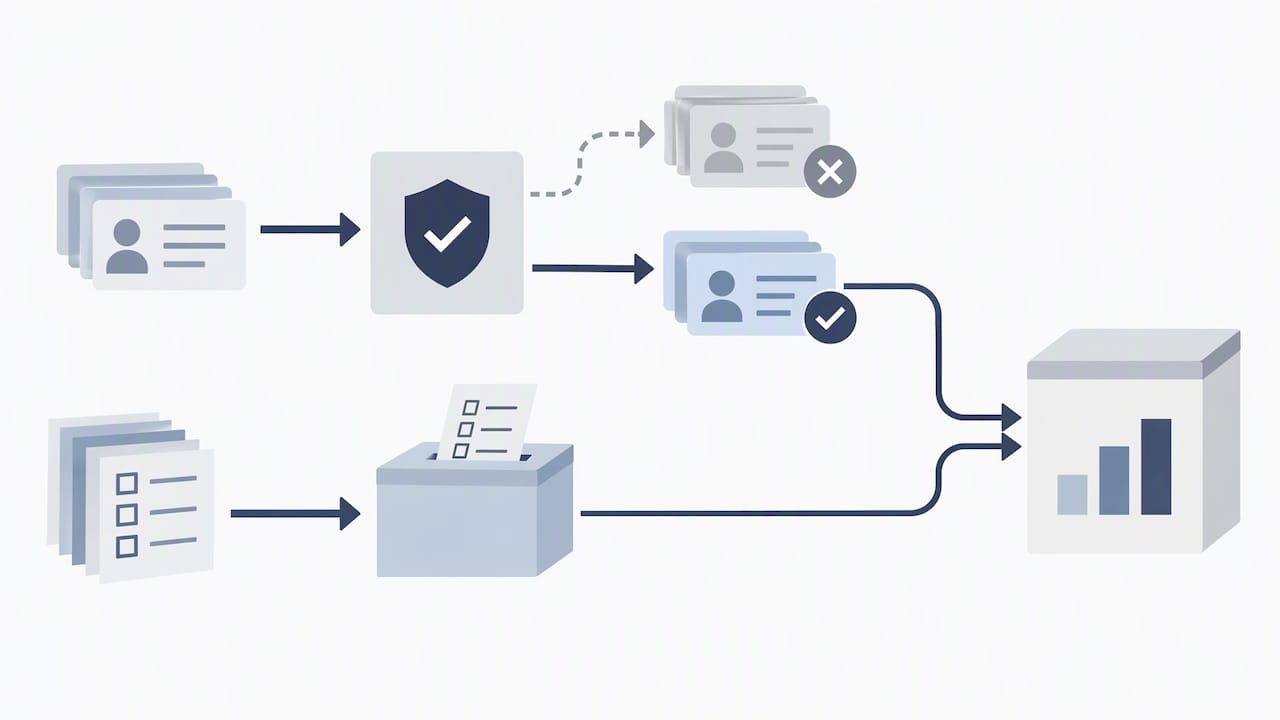
The Unitarian Universalist Association’s technical guidance on online voting recommends collecting unique identifiers such as email or member ID separately from the ballot, so duplicates and unauthorized entries can be caught before results are final. The same logic works for contests: you want to know that a voter is legitimate without displaying who voted for whom.
Be transparent about the money
Researchers studying incentives in voting find that the effect of payment on behavior depends on how openly it is handled. A working paper on vote-buying in controlled settings suggests that when participants feel a vote was bought, they may hold organizers less accountable. The practical lesson for a contest is to make every rule visible. Show live results, publish the vote price and publish the beneficiary split.
Watch the moral hazard
The BBC reported on US cities experimenting with cash prizes to lure people to the polls, and quoted experts who worry that incentives can crowd out the value of voting itself. In a fan award, that concern translates into a design question: are voters choosing the nominee they admire, or the one with the richest friends? Consider a few safeguards:
- Cap the number of votes one person can buy per day or in total.
- Run a free voting round alongside the paid round, so reach alone does not decide everything.
- Let a judging panel score a share of the result, and say so up front.
- Announce the winner’s margin and total raised, not just the name.
A worked example
Imagine a community theater running a “Best Local Hero” award for a spring fundraiser. It nominates twelve people, such as a crossing guard, a pharmacist and a youth coach. Votes cost $1 each, and the theater commits to give the proceeds, after fees, to a youth literacy nonprofit it has vetted in the IRS database.
- Weeks 1 to 2: nominations open, including self-nomination, and photos and short profiles are added.
- Weeks 3 to 5: voting is open. Each voter confirms an email address. The page shows live totals and a notice describing where the money goes.
- Final day: voting closes automatically. The theater announces the winner at its gala and shares the total raised.
- Within 30 days: the theater transfers the funds and posts a short confirmation with the amount.
The numbers are illustrative only, but the pattern holds: a clear disclosure, a vetted beneficiary, a defined window, and a public wrap-up.
Setting it up on Izivote
Izivote is built for public audience awards and events, and the pieces a donation-based contest needs are already there:
- Paid voting with payment handling. You set prices, and voters pay by card. Our paid voting page shows how charging per vote works.
- Voting modes. Open, paid, login and identity-based voting, so you can match the level of verification to the stakes.
- Nominee profiles with photos, multi-category voting and self-nomination.
- Embeddable voting pages you can place on your own website.
- Live results and analytics in an organizer dashboard, plus automatic vote closing.
Our site lists several plans. The Free plan has no published price, which suits a small event. Pro costs $6 per month or $60 per year, and Premium costs $14 per month or $140 per year. Paid voting carries a platform fee of 10% per vote, which you should include when you calculate what the beneficiary will receive and what you disclose to voters. Check the pricing page for the current terms, and use our features overview to see what each plan includes.
If you are launching a fan contest, the fan awards page and the awards and competitions page show typical setups. When you are ready, create your account and build your first voting page.
A launch checklist
- Decide the model: vote for a nominee, vote for a cause, or paid votes with a stated share.
- Pick and vet the beneficiary using IRS records.
- Do the math, including payment processing, platform fees and any costs you will cover, and write the beneficiary share as a clear statement.
- Write public rules: price, caps, dates, tie-breaks, prizes, refund policy.
- Choose the voter verification level that matches the stakes.
- Add the disclosure text above the pay button.
- Test the full flow with a small purchase before opening to the public.
- Monitor the dashboard for unusual spikes, and respond to them according to your published rules.
- Close voting automatically, announce results, and pay the beneficiary on schedule.
- Publish a short wrap-up with the total raised and the amount sent.
FAQ
Is donation-based voting legal in the United States?
For fan awards, school contests and charity events, charging for votes is a common practice. It is not acceptable in political elections, where federal law prohibits payments connected to voting, as set out in 18 U.S. Code § 597. If you plan prizes or raffles linked to voting, ask a lawyer about your state’s rules first.
Are votes tax-deductible?
Not automatically, and you should not suggest they are unless a tax professional or the charity has confirmed it. The FTC treats misleading claims about deductibility as a problem, so state clearly whether a payment is deductible. When in doubt, say that votes are not tax-deductible.
How much of the money should go to the cause?
That is your decision, but it must be stated clearly and honored. Include payment processing and platform fees in your calculation. On Izivote, paid voting has a 10% platform fee per vote, so build that into the figure you show voters.
How do I stop one person from buying the whole contest?
Set per-person caps, require identity verification, add a free voting round or blend in judges’ scores. Then publish those rules before voting starts. Transparent rules matter more than any single control.
Sources
- FTC: Donating Through Crowdfunding and Fundraising Platforms
- FTC: Professional fundraisers, don’t skimp on due diligence or truth
- 18 U.S. Code § 597, Expenditures to influence voting
- IRS Tax Exempt Organization Search
- NIST: Implementation Guidance for the VVSG 2.0
- UUA LeaderLab: Technical guidance on online voting
- U.S. Department of Labor: Electronic voting systems for union officer elections
- BBC News: Would cash prizes make you more likely to vote?
- Working paper on vote-buying in controlled environments
Leave a Reply